Gardening Services in Sutton

Gardening Services Sutton provides practical garden care for homeowners and property managers who want outdoor spaces kept tidy, manageable and ready for everyday use. The main service covers routine maintenance, selective clearance and improvement work, with attention to the condition of lawns, hedges, beds and overgrown corners. Our approach is straightforward: assess what the space needs, agree the scope clearly and carry out the work with care so the garden is left neat and usable.
Many gardens need more than a single visit. Seasonal growth, leaf fall, moss, uneven mowing and general clutter can build up at different times of year, so we offer a structured mix of maintenance tasks rather than a one-size-fits-all approach. That can include regular care, one-off tidy-ups and heavier interventions where a space has become difficult to keep on top of. If you are looking for a practical way to restore order, start by outlining the work you want completed and we can shape the service around it.
To request a quotation, send a brief description of the garden and the type of work needed. A clear outline helps us understand whether the job is mainly maintenance, trimming, clearance or a broader improvement project. You can also use this page to explore the core services before deciding which tasks matter most. For a fuller overview, see the services overview.
Routine garden maintenance
Routine garden maintenance keeps outdoor areas in better order through repeat care rather than occasional rescue work. It can include lawn mowing, edging, weed control in visible areas, border tidying and the removal of light seasonal debris. The aim is to prevent growth from getting away from you and to keep the garden looking deliberate rather than neglected. We tailor the frequency and task list to the condition of the space, the time of year and how much detail is needed.
Where lawns are part of the brief, mowing alone is not always enough. Cut height, edge definition and the condition of surrounding borders all influence the finished result, so we look at the lawn as part of the wider layout. In many gardens, a tidy lawn works best alongside lighter pruning and clearing of edges. If you only need the basics, we can keep the work focused; if the area has become patchy or cluttered, the maintenance plan can be broadened in a controlled way. Learn more about lawn mowing.
Useful maintenance choices often come down to priorities. Some customers want a clean front-facing finish first, while others need the rear garden made manageable for regular use. A sensible sequence can be: cut, trim, clear and then review anything that needs a separate follow-up. When you are ready to compare options, consider what would make the biggest difference this month rather than trying to solve everything at once.
Hedge trimming and shaped growth control

Hedge trimming is important where boundaries, privacy screens and ornamental shapes need to stay controlled. A hedge can quickly lose definition if new growth is left unchecked, especially along paths, driveways and shared edges. Trimming is not just about reducing height; it is also about maintaining even lines, keeping access clear and avoiding a heavy, uneven look. We handle practical hedge work with attention to the plant type, the season and the finish the garden needs.
Different hedges call for different levels of reduction. Some only need a light tidy to maintain their shape, while others require a more thorough cut-back to restore structure. We can work on standalone hedges, perimeter runs and sections that have grown too wide into paths or lawn edges. Where appropriate, the trimmed material can be cleared away as part of the job so the border lines are visible and the garden remains easier to manage afterwards. See the dedicated hedge trimming page for this service.
Good hedge work is usually easiest when the intended shape is clear. If a hedge is meant to stay formal, the cuts need to respect that outline; if it is simply there to provide screening, the focus may be on height, width and safe access around it. Either way, the result should feel intentional. Trimmed growth should support the layout, not dominate it.
Garden clearance for overgrown and cluttered spaces
Garden clearance is the right choice when a space has moved beyond routine upkeep and needs a more substantial reset. This can involve removing long grass, tangled growth, fallen material, broken garden clutter and unwanted debris from beds, borders and unused corners. The work may be concentrated in one section or spread across the whole garden, depending on what has built up. Clearance is often the first step before regular maintenance can begin again.
Because every clearance job is different, the scope should be agreed carefully. Some gardens need only surface-level removal, while others require more attention to access routes, embedded growth or awkward areas near sheds, fences and hard edges. We can combine clearance with trimming or mowing where it is sensible to do so, but the main goal remains the same: to restore order and make the area usable. Read more about garden clearance if this is the level of work you need.
If you are unsure whether your garden needs maintenance or clearance, think about how much of the existing growth needs to be removed before the space can be used properly. A maintained garden is usually working from an existing structure; a cleared garden often needs that structure revealed again. That difference matters, because it helps set the right expectations for timing, equipment and the overall finish.
Landscaping and garden improvement work
Improving the shape, use and finish of the space
Landscaping covers more considered improvement work for gardens that need a clearer layout or a better sense of purpose. That may include refreshing tired areas, redefining borders, improving transitions between lawn and planting, or adjusting parts of the garden so they feel easier to use. The emphasis is on practical improvement rather than decorative excess, with each element chosen to make the space more balanced and manageable. Our landscaping work can sit alongside maintenance when a garden needs both care and correction.
Some improvement projects start with a simple problem: the garden is healthy enough, but the shape no longer works. Paths may be awkward, borders may feel disconnected or the planting may have become too dense. In those cases, measured changes can make a noticeable difference without turning the garden into a full redesign. Where a project needs more detailed planning, the landscape gardening service may be a better fit for shaping the layout and planting direction.
A useful way to plan this kind of work is to decide whether you want the garden to look cleaner, feel larger, move better or support more planting. Those are different aims, and they do not always need the same solution. We focus on the change that matters most, then build the rest of the brief around it so the final result stays coherent.
Landscape gardening for more considered layouts
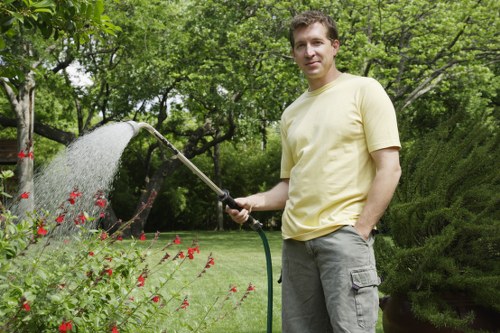
Landscape gardening is suited to gardens that need a more deliberate arrangement of features, planting and circulation. Rather than simply tidying what is already there, this work considers how different parts of the space relate to one another. It can involve reshaping borders, improving the flow between areas and selecting changes that help the garden feel more settled. The service is useful when the outdoor area has potential, but the current arrangement does not make the best use of it.
Because landscape gardening can vary widely, it is sensible to separate essential changes from optional extras. A stronger brief may begin with one problem area and expand once the main layout is clear. That could mean softening hard edges, improving balance between open and planted sections or creating a tidier framework for future growth. Where needed, this work may be paired with other services such as hedge trimming or clearance, but each task should still have a defined purpose. The landscaping page may help if you want to compare the broader options.
Garden improvement is usually most effective when it matches the way the space is actually used. A family garden, a low-maintenance side return and a front area seen from the street may all call for different priorities. Rather than treating every garden as the same, we keep the design decisions connected to the site itself. If you want a quotation, it helps to note the features you would like to keep, change or remove.
About Sutton
Sutton is a large town in South London and the principal settlement of the London Borough of Sutton, with a history shaped by its position on routes linking the capital with Surrey. The town grew from a market centre into a suburban district during the nineteenth and twentieth centuries, helped by the arrival of the railway and the spread of residential development. Its centre combines later shopping streets, civic buildings and transport links, while older layers of the settlement remain visible in the pattern of roads and historic institutions. The borough includes a mix of residential neighbourhoods, open spaces and local centres, giving the area a varied urban character rather than a single uniform core. Sutton High Street acts as one of the main commercial spines, and nearby streets contain a mix of retail, community and public uses. The borough is also known for several well-used parks and open green spaces, including Nonsuch Park, which occupies land associated with the former Tudor palace of Nonsuch. Other nearby places of note include Carshalton, Cheam and Beddington, each with its own distinct identity within the wider borough. The River Wandle runs through parts of the district, linking Sutton to a wider network of south London waterways and historic mill sites. In the town centre, modern redevelopment sits alongside older architecture, while public spaces and transport interchanges continue to shape everyday movement through the area. This blend of suburban growth, historic references and accessible green space gives Sutton a character that is both practical and varied, with a strong local centre and several surrounding communities that remain closely connected to it.
Tree work and access-focused pruning
Tree lopping and removal is a separate service for situations where branches or entire trees are affecting light, access or the general structure of the garden. This work needs to be handled carefully because the condition, size and position of a tree all influence what can be done safely and sensibly. The aim is not to cut simply for the sake of it, but to address the specific issue, whether that is overextension, obstruction, crowding or an unsuitable tree in a difficult location. Find out more on the tree lopping and removal page.
In some gardens, lighter pruning is enough to improve the use of the space. In others, a tree may be contributing to ongoing shade, encroachment or general clutter and require more decisive action. Because each case is different, the work should be judged on the tree’s condition, the surrounding layout and the practical result needed at ground level. If access is limited or branches are close to structures, that becomes part of the planning rather than an afterthought.
It is often useful to decide whether the tree is being managed for shape, containment or removal. Those are not interchangeable aims, and the right method depends on which one matters most. Clear brief, clear outcome is usually the best way to approach tree work, especially when it affects the wider garden plan.
Decking and outdoor surfaces

Practical features that support the garden
Decking can provide a useful transition between the house and the garden, or create a defined area for sitting, moving or accessing different parts of the plot. It works best when the layout is thought through carefully, because the shape, position and edge treatment all affect how well it blends with the rest of the space. Our decking service sits alongside broader garden improvement work where a more usable outdoor surface is part of the brief. You can view the service details on the decking services page.
Well-planned decking should support the way the garden is used rather than compete with it. In some gardens, it may provide a level area where the ground is uneven; in others, it can help separate a seating zone from planting or lawn. The surrounding finish matters too, because even a simple deck looks better when the edges, joins and nearby borders are clean and coherent. That is why it is sensible to think about decking as part of the overall garden rather than as an isolated feature.
When comparing improvement options, consider how permanent the change should be and how much ongoing upkeep you are comfortable with. Useful surfaces are those that suit real use, not just appearance. If you are ready to move forward, the next step is to outline the area you want improved and request a quotation.
Quotations, scope and sensible preparation
For most enquiries, the clearest quotations come from a short description of the garden and the tasks you would like completed. It helps to mention whether the work is regular maintenance, a one-off clearance, hedge trimming, tree work or a broader improvement project. If there are access limitations, awkward sections or particular features that matter to you, include those as well. That gives us a better basis for setting out the right service and avoids unnecessary assumptions.
If you are comparing options, a simple checklist can help you organise the request before you contact us:
- Which parts of the garden need attention first
- Whether you want maintenance, clearance or improvement work
- Any features to keep, cut back or remove
- Access details that could affect the work
The next step is simple: tell us what needs doing and ask for a quotation. If you would like to review the company details first, the about us page gives a clearer picture of the business background and the contact us page is the place to send your enquiry.
Pricing, payment and service information

Pricing for gardening work is usually shaped by the size of the area, the type of task, how much material needs to be cleared and whether the work is routine or more involved. A straightforward mow is different from a full clearance or a mixed project that includes trimming, removal and finishing touches. For that reason, the most useful quotation is one that reflects the actual scope rather than a broad assumption. If you want to understand how estimates are approached, visit the pricing and quotes page.
It is also sensible to think about how the work is phased. Some gardens benefit from a first visit that restores order, followed by lighter maintenance once the main issues have been dealt with. That can be a practical way to manage larger spaces or gardens with several different tasks. We can discuss the order of work with you so the plan remains realistic and the results build in a sensible sequence. That is often the best way to keep both cost and outcome clear.
For more information about how we handle transactions and site safety arrangements, there are dedicated pages for payment and security and insurance and safety. If you are ready to proceed, please request a quotation today.